The previous accepted convention of largo Language Model (LLM) agents used for autonomous task execution has been that they are static systems; their behaviour when used at inference time is fixed and does not depend on feedback signals they receive during run time. The paper introduces a reinforcement learning (RL) approach to designing a self-improving LLM agent framework that allows agents to selectively improve action selection policies, rather than fine-tuning LLM parameters, by accepting scalar rewards based on the success of their action. The proposed architecture combines a GPT-4/LLaMA task planner with an episodic memory module that looks up previously seen state–action pairs, and an actor-critic policy network trained using proximal policy optimisation (PPO) to concurrently optimise for task accuracy, execution efficiency, and operational cost, represented by a composite reward function R(s,a) = ?A + ?E ? ?C. The framework is tested against a baseline static agent and a memory-augmented agent against three benchmarks: HumanEval, GSM8K, and HotpotQA. Experimental results show the RL agent attains 97% task accuracy, 95% learning efficiency, and 1,650 ms prediction latency on average, due to which 15% high and 20% high improvements are achieved over the standard agent, and prediction latency stays in acceptable range for the conversations when compared with the humans. Learning convergence is reached after 10-12 training episodes, while the policy updater of PPO is stable along the training trajectory due to its KL-divergence (KL-D) clipping mechanism. This paper demonstrates that reinforcement learning is a tractable method for the continual, autonomous optimization of deployed LLM agents..
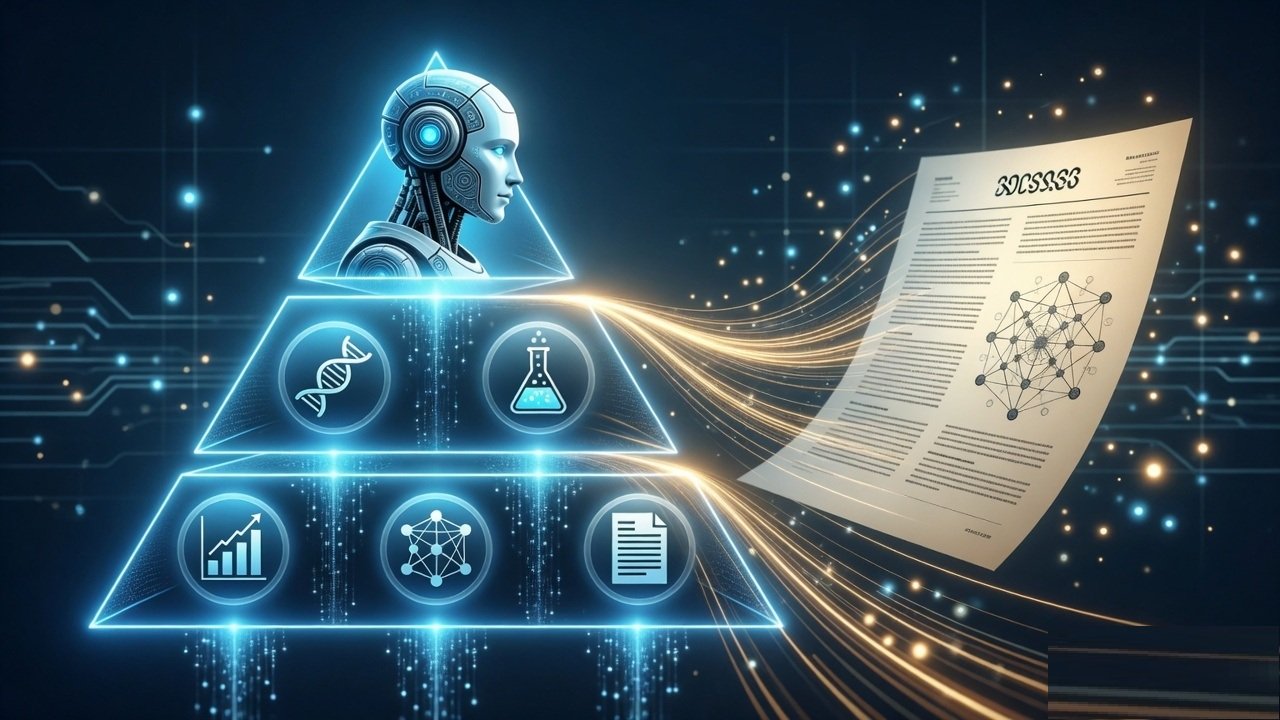
In this paper, basic steps of scientific discovery literature analysis, idea generation, experiment ...
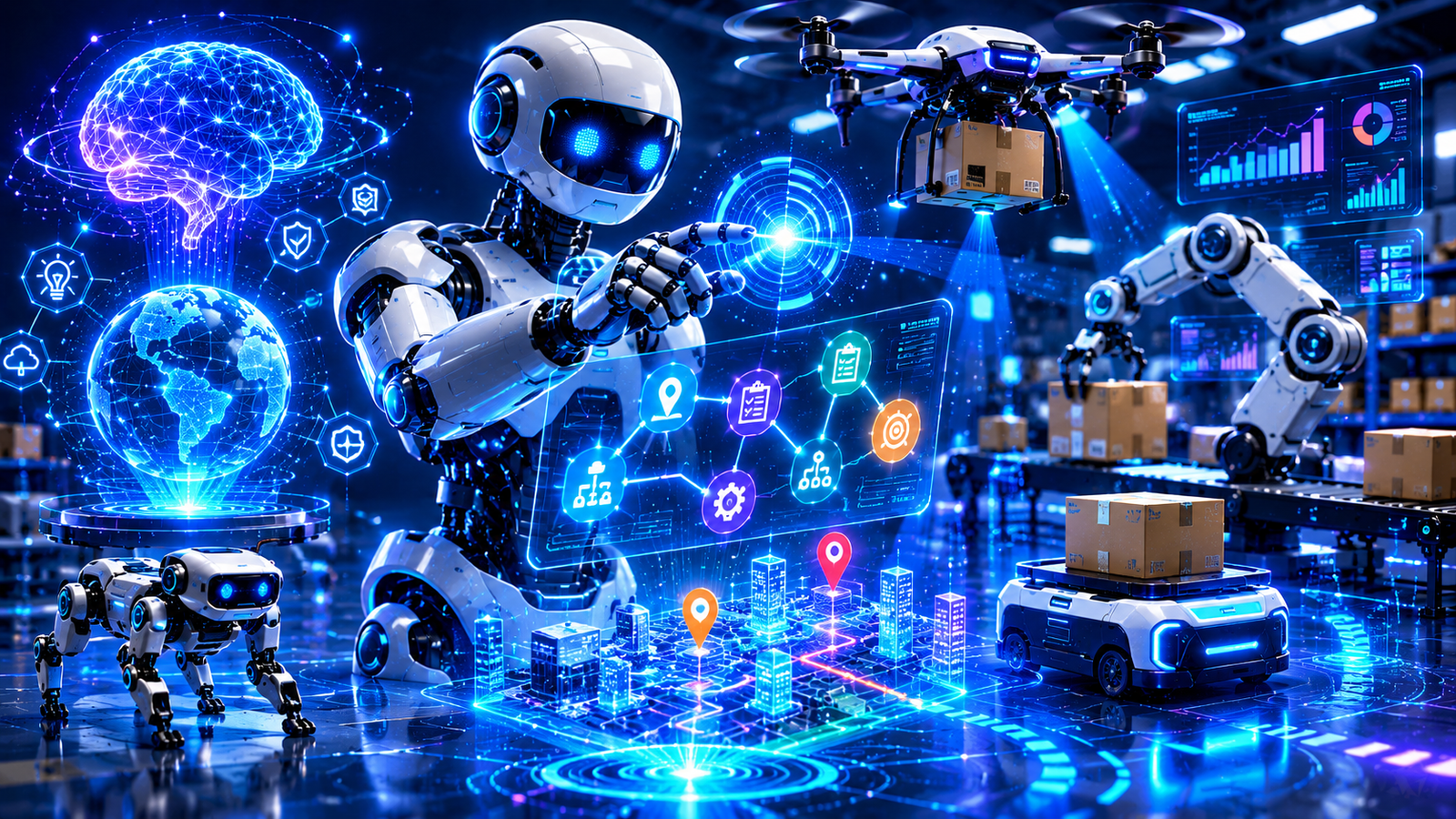
Embodied Agentic AI systems transcend the capabilities of language-based intelligence systems by inc...

Large Language Models (LLMs) are shown to have a strong ability, on various fields of work related t...
Recent developments of deep learning have enabled important progress in brain-computer interfaces an...