
Vehicles with modern high performance run with complex multi-sensor data-streams under extreme aerodynamic and structural loading where there is a lack of accurate modelling in conventional linear state-space. This paper presents an extended Riemannian geometry framework for structural stability prediction in multi-sensor dynamic vehicle systems using an embedding of multi-sensor measurements onto a curved Riemannian manifold which better retains the true nature of the dynamic system behavior than the Euclidean distance assumption. The framework combines the synchronized acquisition of the sensors, projection of symmetric positive definite (SPD) covariance matrices for the manifolds, calculation of the geodesic distance, calculation of curvature using Christoffel symbols, calculation of a composite instability index (?), which is based on the curvature, geodesic divergence and velocity-weighted contributions. The system is run on an instrumented Formula type car at 1000 Hz on all the IMUs and 240 fps in all speed zones ranging from 80 to 340 km/h. Experimental comparison to the linear, Kalman filter and LSTM baselines shows that the proposed Riemannian framework achieves the highest structural state prediction accuracy of 96%, 3% higher than the LSTM baseline, the shortest prediction lead time (182 ms), and the lowest variance (? = 0.03) among the three approaches. The findings pave the way towards a mathematically robust, yet practically applicable basis for next generation structural health monitoring for safety-critical applications in vehicle structures.
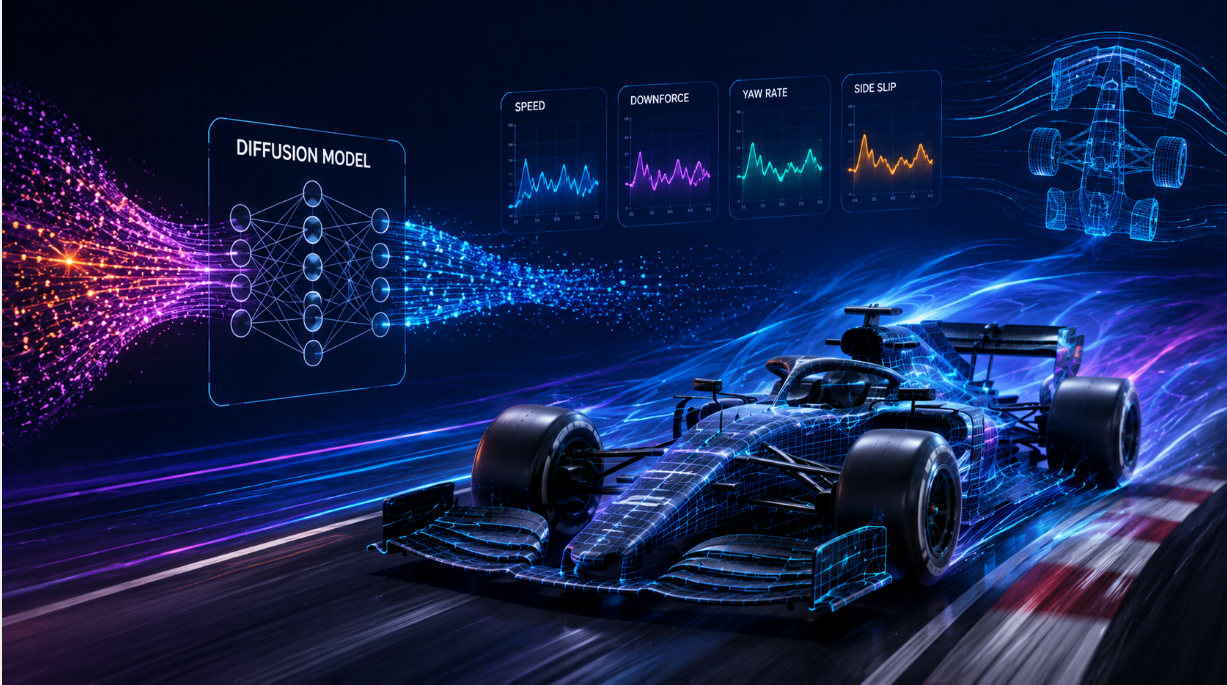
The use of real-world motorsport telemetry data is limited by its relative rarity, commercial confid...

Being a collaborative, iterative process, scientific discovery requires synthesis of large amounts o...
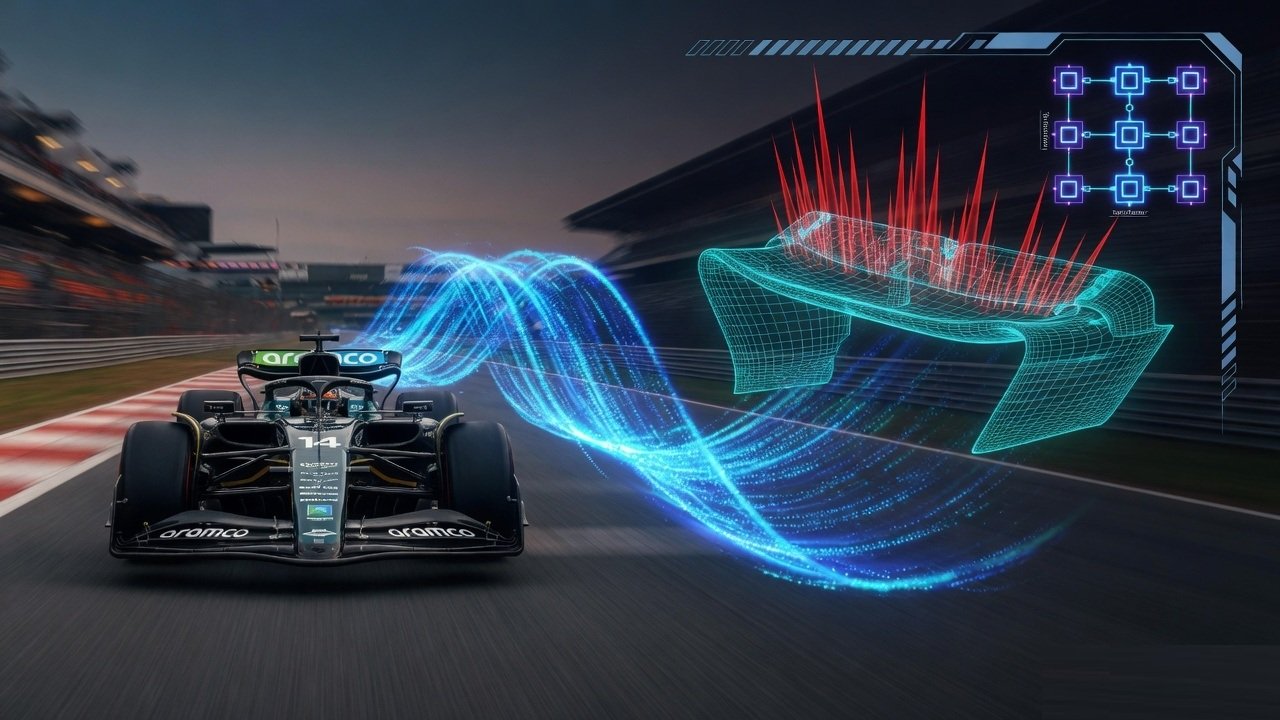
The ground-effect Formula 1 modern cars including today's are often aerodynamically unstable which a...
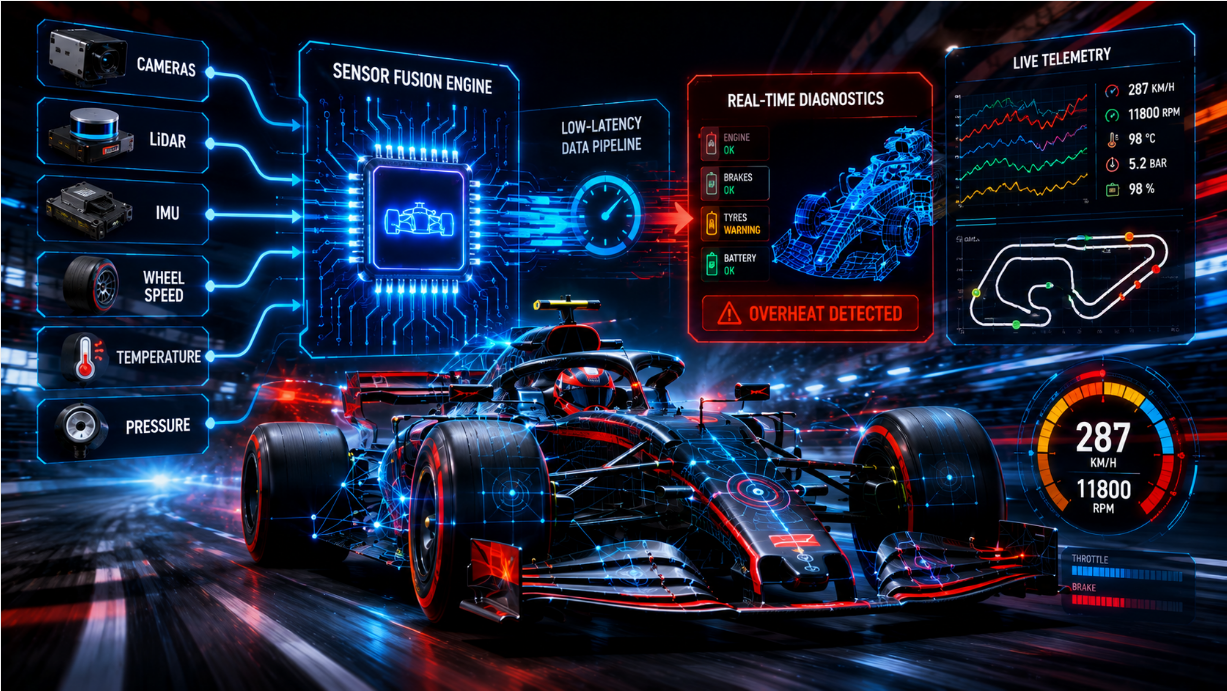
Current motor sports environments can generate vast amounts of telemetry data from cameras, inertial...