
In F1 vehicles, Aero-elastic wing flutter is a serious concern on the integrity of the wing structure that can cause catastrophic failure in the vehicle within milliseconds of the onset of flutter, at race speeds above 300 km/h. The current telemetry-approaches based on convolutional neural networks (CNNs) or long short-term memory (LSTM) models show limited predictions lead time and high false-alarm rates under the highly dynamic aero-mechanical conditions they encounter when handling race events. This paper introduces the Wing Flutter Detection (TF-WFD) framework based on Transformer, combining high-speed vision and multiple sets of aero-elastic parameters from inertial measurement units (IMUs) and fibre Bragg grating (FBG) strain gauge data.This paper proposes a framework of Wing Flutter Detection (TF-WFD) based on Transformer, which integrates heterogeneous multi-sensor telemetry data, including a high-speed vision system, IMUs, and fibre Bragg grating (FBG) strain meter. A real-time risk metric based on the structural deformation, acceleration, and velocity features is derived from a composite Flutter Index (FI), which is interpretable. Understanding how well the framework can perform, it achieves an accuracy of 97.9% in classification, an F1-score of 0.974 in detection, a detection lead time of 180ms (twice that of CNN baselines) and 0.05 false alarms per hour, which allows for proactive aerodynamic intervention before structural damage is imminent.
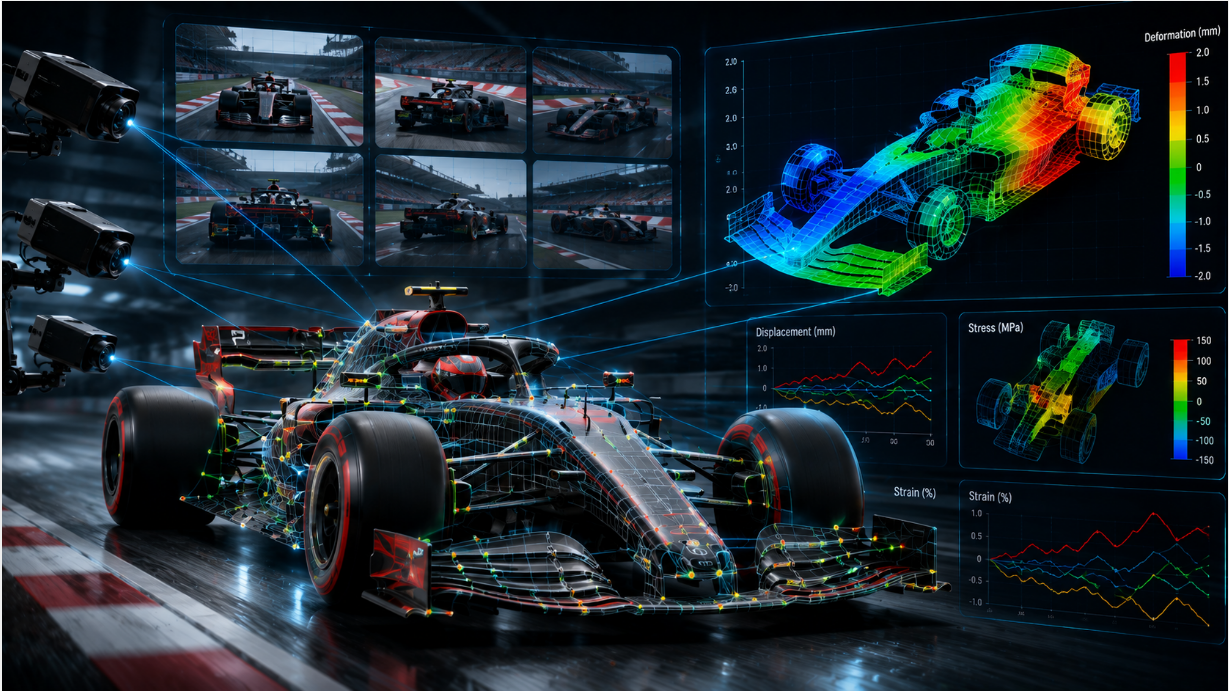
Rear wings, front wings and floor edges are examples of or more distinctive parts of the car's struc...

Although significant advances have been made in classification of electroencephalograms (EEGs) in bi...

The classification methods based on EEG have been shown to be valuable for EEG diagnosis of neurolog...

In this paper, we have come to know that the epilepsy is a common neural disorder in children which ...